
By: ABRS- Academic Team
Introduction
The expectations surrounding Functional Service Providers have changed significantly over the past decade. As clinical trials become increasingly complex, global, and data-driven, sponsors are looking beyond traditional staffing models in search of strategic partners capable of supporting long-term operational success. Today, providing experienced professionals is only one part of the equation. Sponsors also require integrated governance, operational consistency, regulatory expertise, and scalable solutions that can adapt to the evolving demands of clinical development.
This transformation has reshaped the role of the Global Functional Service Provider. Rather than acting as an external resource supplier, a modern FSP is expected to become an extension of the sponsor’s organization, contributing to planning, execution, oversight, and continuous improvement across multiple clinical functions. The focus has shifted from filling positions to building partnerships that strengthen operational performance and create lasting value.
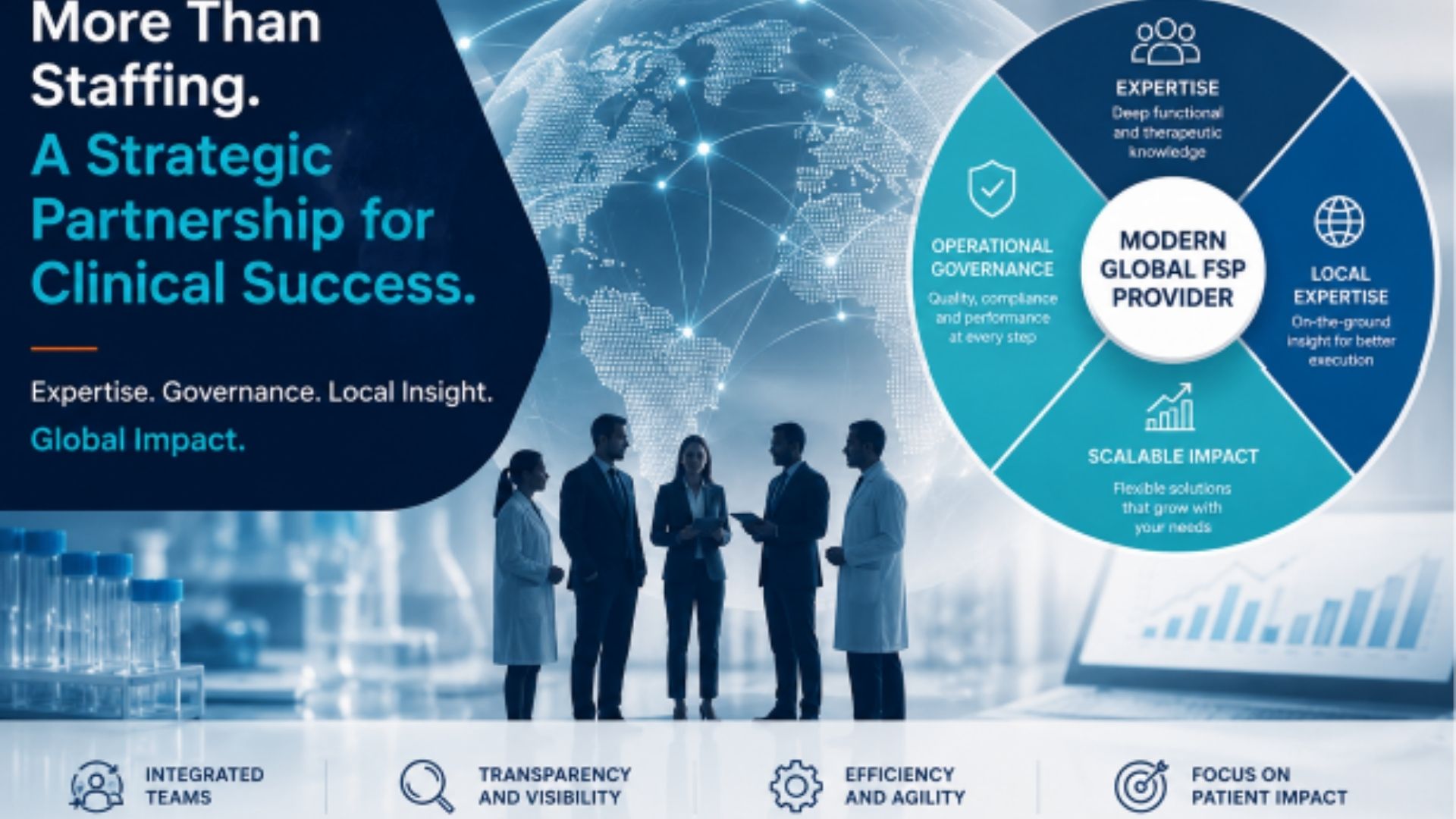
At ABRS, we believe that successful clinical development depends on combining experienced professionals with structured governance, standardized processes, and a collaborative approach that keeps sponsors in control while providing the flexibility to scale globally. In this article, we explore what defines a modern Global FSP provider and why sponsors increasingly expect far more than staffing support from their strategic partners.
A Modern Global FSP Is Built on Expertise, Not Just Resources
For many years, Functional Service Providers (FSPs) were primarily viewed as organizations that supplied qualified professionals to support specific clinical functions. While access to specialized talent remains an important advantage, today’s clinical research environment requires a far more comprehensive approach. As clinical trials become increasingly global, technology-driven, and operationally complex, sponsors are looking for partners that can combine scientific expertise with operational consistency, governance, and long-term strategic support rather than simply filling workforce gaps.
The life sciences industry is undergoing a profound transformation driven by digital innovation, evolving regulatory expectations, and increasing pressure to improve efficiency across clinical development. According to Deloitte, organizations are redesigning their operating models to become more agile, collaborative, and resilient while accelerating innovation and improving business performance (Deloitte, 2025). This transformation is changing the role of outsourcing partners, who are now expected to contribute operational expertise and strategic value throughout the clinical development lifecycle rather than acting solely as staffing providers.
Similarly, EY highlights that life sciences organizations are rethinking traditional operating models to better integrate people, technology, and processes. This shift enables organizations to improve collaboration, respond more effectively to change, and create sustainable value across increasingly complex healthcare ecosystems (EY, 2024). These evolving expectations reinforce the need for outsourcing partners capable of delivering scalable operational frameworks that support long-term clinical development objectives instead of isolated functional services.
The industry is also recognizing that successful outsourcing depends on building collaborative partnerships supported by standardized processes and clearly defined governance. Applied Clinical Trials emphasizes that organizations are moving beyond traditional sourcing models toward more integrated outsourcing strategies that improve communication, accountability, and operational alignment across sponsors and service providers (Applied Clinical Trials, 2023). This evolution reflects a growing understanding that operational excellence depends as much on governance and collaboration as it does on technical expertise.
At ABRS, we embrace this modern vision of Functional Service Provision. Our Global FSP model combines experienced clinical professionals with structured governance, standardized operating procedures, proactive communication, and continuous performance monitoring. By integrating these capabilities into a unified operational framework, we help sponsors strengthen oversight, improve execution, and maintain consistency across global clinical programs while preserving the flexibility required in today’s dynamic research environment.
Ultimately, the true value of a Global FSP is measured not by the number of professionals deployed but by the strength of the operational model supporting clinical execution. Sponsors increasingly seek partners that provide expertise, transparency, governance, and scalability—qualities that enable long-term collaboration and contribute to the successful delivery of high-quality clinical trials.
Operational Governance Is What Creates Long-Term Value

As clinical trials become more complex, the value of a Global Functional Service Provider extends far beyond delivering qualified professionals. While technical expertise remains essential, sustainable clinical performance depends on the ability to establish governance structures that enable transparency, accountability, and consistent decision-making throughout every phase of study execution.
Leading life sciences organizations are increasingly recognizing that operational excellence is built through standardized governance rather than isolated functional expertise. Deloitte explains that organizations capable of integrating people, technology, and business processes into cohesive operating models are better positioned to improve organizational resilience, accelerate innovation, and adapt to rapidly changing market conditions (Deloitte, 2025).
This evolution is also reflected in modern clinical research guidance. As part of the implementation of ICH E6(R3), TransCelerate has developed practical frameworks that encourage sponsors to adopt proportionate, risk-based governance models capable of identifying critical-to-quality factors early, strengthening oversight, and embedding quality throughout the clinical trial lifecycle rather than relying on retrospective quality control (TransCelerate BioPharma, 2025). These principles reinforce that governance should be proactive, data-driven, and integrated across all outsourced activities.
Effective governance also requires continuous visibility into operational performance. Rather than monitoring activities independently, sponsors increasingly rely on integrated governance models that align quality metrics, risk management, communication, and executive reporting under a common operating framework. According to Clinical Leader, modern outsourced clinical operations achieve better outcomes when quality is engineered into the operating model itself through coordinated governance disciplines instead of being evaluated only during audits or inspections.
At ABRS, governance is at the core of our Global FSP model. Beyond providing experienced clinical professionals, we establish structured governance frameworks that support performance monitoring, standardized reporting, proactive communication, and continuous operational improvement. This approach allows sponsors to maintain strategic oversight while benefiting from scalable execution across multiple countries, therapeutic areas, and functional services.
Ultimately, operational governance creates value by enabling consistency, accountability, and informed decision-making throughout the clinical development lifecycle. As outsourcing strategies continue to evolve, sponsors are increasingly seeking partners capable of delivering not only expertise but also the governance systems that transform clinical operations into resilient, inspection-ready, and continuously improving organizations. This perspective is also supported by RSM US, which highlights that successful outsourcing depends on embedding quality agreements, governance mechanisms, proactive performance metrics, and risk management into vendor relationships from the very beginning, rather than treating oversight as a reactive compliance activity (RSM US, 2025).
Global Reach Requires Local Expertise
As clinical research continues to expand across diverse regions, sponsors face the challenge of maintaining consistent operational standards while adapting to local regulatory requirements, healthcare systems, and cultural environments. Successfully conducting global clinical trials requires more than standardized processes; it demands partners who can combine global governance with deep regional knowledge to ensure studies are executed efficiently and compliantly.
Modern Global Functional Service Providers play a critical role in bridging this gap. While centralized governance provides consistency in quality, reporting, and operational oversight, local expertise enables organizations to navigate country-specific regulations, engage effectively with investigative sites, and respond to regional operational challenges. Deloitte highlights that organizations with integrated operating models are better equipped to balance global standardization with local execution, improving both organizational agility and long-term performance (Deloitte, 2025).
This balance has become even more important with the implementation of ICH E6(R3), which emphasizes proportionate oversight, quality by design, and risk-based management throughout the clinical trial lifecycle. These principles encourage sponsors to adopt governance models that remain flexible enough to address regional differences while maintaining consistent quality standards across all participating countries (ICH, 2025; TransCelerate BioPharma, 2025).
At ABRS, we recognize that successful global clinical operations depend on combining standardized governance with experienced local professionals who understand the regulatory, cultural, and operational realities of each region. Our Global FSP model enables sponsors to maintain centralized oversight while benefiting from regional expertise that supports site relationships, regulatory compliance, patient engagement, and operational continuity across international programs.
Ultimately, sponsors are no longer looking for outsourcing partners that simply expand operational capacity. They are seeking strategic organizations capable of delivering a consistent global operating model while adapting execution to local realities. By integrating governance, experienced professionals, and regional knowledge within a single framework, ABRS helps sponsors build more resilient clinical operations, reduce operational variability, and confidently execute clinical trials across global markets.
Conclusion:
The role of the Global Functional Service Provider has evolved alongside the increasing complexity of clinical research. Today, sponsors need more than access to qualified professionals—they need partners capable of strengthening governance, improving operational visibility, supporting regulatory compliance, and delivering consistent execution across global clinical programs.
A modern FSP creates value by combining expertise, standardized processes, performance-driven governance, and local execution within a single operational framework. This approach enables sponsors to simplify oversight, improve collaboration, and respond more effectively to the challenges of an increasingly dynamic clinical development environment.
At ABRS, we see every partnership as an opportunity to become an extension of our clients’ teams. By combining global capabilities with regional expertise, structured governance, and a commitment to operational excellence, we help sponsors build resilient clinical operations that support quality, efficiency, and sustainable growth.
As the future of clinical research continues to evolve, the organizations that embrace strategic, collaborative, and governance-driven partnerships will be best positioned to accelerate innovation and successfully deliver clinical trials that make a meaningful difference for patients around the world.
