
By: ABRS- Academic Team
Introduction
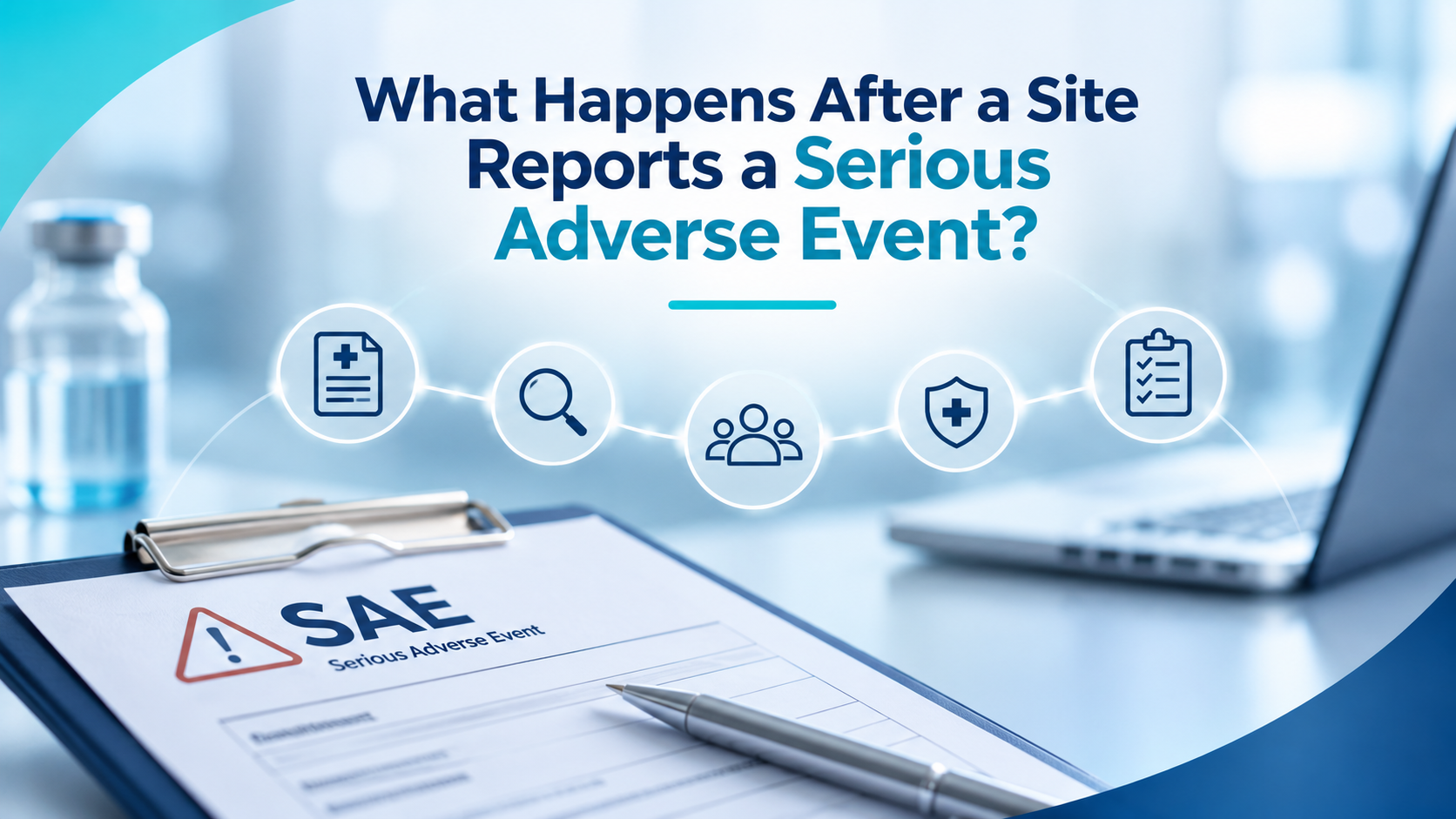
When a serious adverse event (SAE) occurs during a clinical trial, the initial report from the investigative site marks the beginning of a broader safety evaluation process. What follows involves more than documenting a medical occurrence. Clinical information must be reviewed, additional details may need to be obtained, and the sponsor must determine whether the event meets applicable regulatory reporting criteria.
These activities involve professionals with distinct responsibilities, including investigators, clinical research associates (CRAs), pharmacovigilance specialists, medical reviewers, and regulatory teams. Their contributions are interconnected, but their responsibilities are not interchangeable.
For sponsors working with Functional Service Provider (FSP) teams, this process illustrates an important dimension of functional integration: specialized professionals must be able to support different stages of safety information management while operating within clearly defined clinical and regulatory responsibilities.
The Initial Report Is Only the Beginning
A serious adverse event is defined by its medical consequences, not necessarily by its intensity or presumed relationship to an investigational product. Events resulting in death, life-threatening circumstances, hospitalization, significant disability, or other medically important outcomes may meet seriousness criteria. A severe symptom, however, does not automatically constitute an SAE if the applicable seriousness criteria are not met.
The FDA’s December 2025 guidance on investigator safety reporting clarifies the responsibilities of investigators conducting studies under an Investigational New Drug application (IND). Investigators must report SAEs to sponsors immediately, subject to specific arrangements for certain study endpoints. The FDA recommends defining the initial reporting timeframe in the protocol and anticipates that it will generally not exceed one calendar day. Additional clinical information may be submitted after the initial notification.
An initial report may contain incomplete information. A participant might be hospitalized before a definitive diagnosis becomes available, or important laboratory findings may only be received later. Consequently, the initial notification and the subsequent medical follow-up serve different purposes. The first communicates the event promptly, while the latter contributes additional information needed for a more complete clinical assessment.
Information such as the event chronology, relevant medical history, concomitant medications, diagnostic findings, treatment exposure, and clinical outcome can help clarify the circumstances surrounding an SAE. Clinical monitoring professionals may support communication with the investigative site and the follow-up of outstanding documentation, according to their assigned responsibilities. The investigator, however, remains responsible for the participant’s clinical care and the medical judgments required of the investigator.
From Event Documentation to Safety Assessment

Receiving an SAE report does not automatically establish that the investigational product caused the event. A sponsor must assess the available information, including the investigator’s medical evaluation, to determine whether there is evidence suggesting a causal relationship. The assessment may also require consideration of the underlying disease, concomitant treatments, and findings from other participants or studies.
The FDA’s December 2025 guidance on sponsor safety responsibilities provides recommendations for identifying reportable safety information, evaluating serious suspected adverse reactions, and reviewing aggregate safety data. This distinction is particularly relevant in clinical populations where certain serious medical events may occur independently of treatment exposure. In such circumstances, the interpretation of an individual event may need to be informed by additional evidence.
Three concepts influence this evaluation: seriousness, causality, and expectedness. Seriousness concerns the medical consequences of the event. Causality concerns whether the investigational product may have contributed to its occurrence. Expectedness considers whether the event is consistent with the applicable reference safety information. These assessments serve different purposes and should not be treated as equivalent.
Regulatory reporting requirements depend on the outcome of the assessment and the applicable jurisdiction. In the United States, FDA IND safety reporting requirements establish specific criteria and timelines for reporting serious and unexpected suspected adverse reactions, as well as other qualifying safety findings. In the European Union, sponsors report suspected unexpected serious adverse reactions (SUSARs) through EudraVigilance, while other safety notifications follow the relevant Clinical Trials Regulation procedures. These differences reinforce the need to distinguish the original SAE notification from subsequent regulatory reporting decisions.
Connecting Clinical Monitoring, Pharmacovigilance, and FSP Operations
A single SAE may generate responsibilities across several clinical functions. The investigative site provides the initial medical information and subsequent updates. Pharmacovigilance personnel may process the case, review available information, request clarification, and support safety evaluations according to their assigned roles. Clinical monitoring teams may help maintain communication with the site, while data management personnel address relevant discrepancies within clinical databases.
Consider an illustrative situation in which a participant is hospitalized with a preliminary diagnosis that changes after additional testing. The site may need to update the clinical narrative and associated records. The pharmacovigilance team must consider whether the new findings change the case assessment. Clinical data records may also require reconciliation so that the safety and study databases accurately reflect the event. These activities are related, but each requires different expertise and appropriate authorization.
The ICH E6(R3) Good Clinical Practice guideline places responsibility for ongoing investigational product safety evaluation on the sponsor. It also recognizes the importance of reviewing emerging safety information and communicating relevant findings when they may affect participant protection, study conduct, or regulatory considerations. Depending on the findings, a safety evaluation may contribute to decisions about updating the Investigator’s Brochure, the protocol, or informed consent materials.
This is where functional specialization becomes relevant to an FSP arrangement. Professionals supporting monitoring, pharmacovigilance, or other clinical functions need to understand how their assigned activities connect with the wider safety information process. Integration does not mean transferring medical judgment to personnel who are not responsible for it, nor does it remove the sponsor’s accountability. Rather, FSP support can be structured around clearly defined responsibilities, appropriate expertise, and established communication pathways. Within support structures such as ABRS’s FullSpectrum FSP model, these considerations provide a practical framework for understanding how specialized functions may contribute to sponsor-led clinical operations.
Conclusion:
The reporting of a serious adverse event is an important starting point, but it is not the end of the safety evaluation process. The information received from an investigative site must be interpreted in its clinical context, supplemented when necessary, and evaluated against applicable safety reporting requirements.
For sponsors managing clinical trials across multiple sites and regions, the process involves professionals who contribute different types of expertise. The ability to distinguish these responsibilities, maintain accurate information, and support appropriate communication is relevant to both participant protection and the reliability of clinical safety assessments.
From an FSP perspective, the value of specialized functional support should be understood through the responsibilities professionals perform and their ability to work within the sponsor’s clinical and regulatory framework. SAE management offers a concrete example of how clinical monitoring, pharmacovigilance, and related functions intersect throughout the conduct of a study.
