
By: ABRS- Academic Team
Introduction
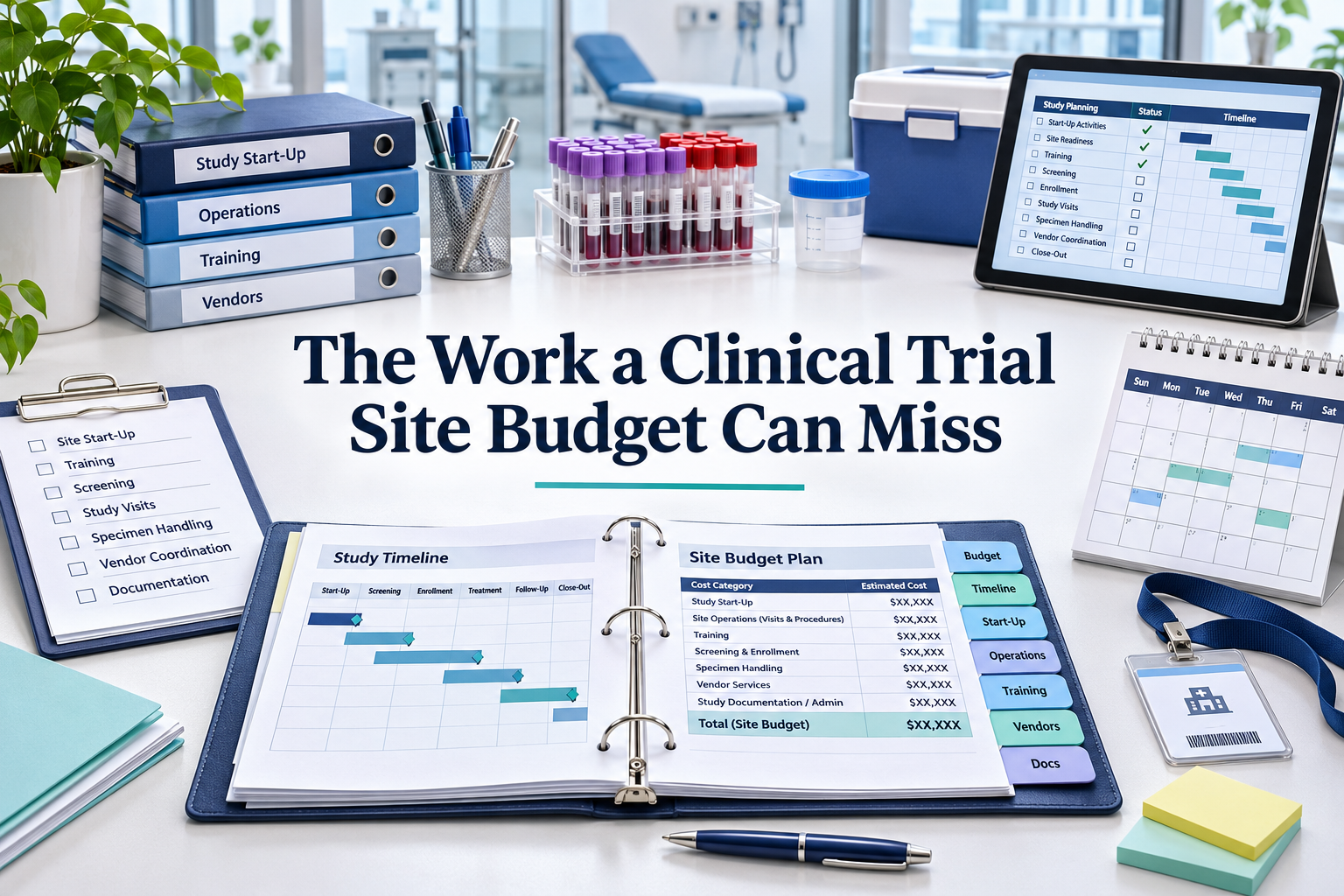
A clinical trial protocol defines the procedures required to generate evidence, but completing those procedures involves considerably more work than the activities listed in a participant visit schedule. Before the first participant is enrolled, investigative sites may need to train personnel, configure systems, coordinate with vendors, and prepare operational resources. During the study, additional responsibilities arise through screening activities, participant follow-up, protocol changes, and ongoing documentation.
These activities consume time and institutional resources, yet they may not always be adequately represented in the site’s initial budget. The challenge is not simply whether a sponsor and an investigative site can agree on a financial amount. It is whether the proposed budget reflects the work required to conduct the study.
For sponsors managing multicenter and multinational trials, this distinction has implications for study planning and site relationships. It also creates a specific opportunity for professionals working within Functional Service Provider (FSP) arrangements: connecting knowledge of clinical trial requirements with a more complete understanding of site-level execution.
The Protocol Describes the Procedures, but Not Every Operational Activity
The schedule of activities is a central planning tool in clinical research. It identifies when participants undergo assessments, laboratory tests, examinations, and other protocol-specified procedures. However, the activities necessary to organize and document these assessments may extend beyond the procedures themselves.
Consider a protocol requiring specialized laboratory assessments at several visits. The associated site workload may include coordinating sample collection, preparing equipment, processing or storing specimens, arranging shipments, and responding to laboratory queries. The precise responsibilities depend on the study design, the laboratory manual, vendor arrangements, and the site’s capabilities. A budget developed without examining these supporting requirements may underestimate the operational effort involved.
A 2024 article published in Contemporary Clinical Trials Communications, Redefining Feasibility in Clinical Trials: Collaborative Approaches for Improved Site Selection, describes how incomplete protocol, laboratory, and vendor information can affect site feasibility assessments. The authors explain that details about sample processing, storage, equipment, and vendor requirements may emerge after initial feasibility discussions, potentially requiring adjustments to site plans, budgets, or contracts.
Training presents a similar challenge. Preparing a site may require instruction on the protocol, electronic systems, study-specific technology, and procedures introduced by external providers. The Society for Clinical Research Sites (SCRS) 2024 Site Finances Whitepaper, drawing on its 2023 survey, identifies training and technology implementation among activities that sites report as inadequately funded. These findings reinforce the value of examining the work that supports protocol execution, rather than limiting budget discussions to participant visits.
Where Underfunded Activities Affect Site Operations

Financial misalignment becomes more visible when activities require substantial effort but do not result in a completed participant visit or an enrolled participant. Screening is one example. Investigative sites may review medical records, assess eligibility, obtain consent, coordinate diagnostic procedures, and document findings before determining whether an individual qualifies for a study.
A participant who does not meet the eligibility criteria may still have required significant site resources. The 2025 SCRS Site Landscape Report identifies startup costs, screen failure reimbursement, and recruitment expenses among the areas most frequently reported as underfunded in initial budgets. These survey findings represent the perspectives of participating research sites; they should not be interpreted as evidence that all sponsors or studies follow the same funding practices.
The financial structure of a site also shapes how these gaps are experienced. In the 2025 peer-reviewed article Establishing a Clinical Trial Site: A Primer for Aspiring Principal Investigators, Sramek and colleagues discuss the importance of accounting for screening, additional procedures, startup costs, and payment timing when operating an investigative site. They note that expenses may occur before corresponding study revenue is received, creating cash-flow considerations for site management.
Protocol modifications can introduce additional operational demands after a budget has been agreed upon. New assessments, revised visit schedules, additional training, or changes to study technology may alter the activities a site must perform. Whether those changes require a contractual or financial adjustment depends on the agreed terms and applicable arrangements. Nevertheless, from an operational perspective, it is reasonable to reassess the relationship between study requirements and the resources allocated to perform them.
Connecting Clinical Monitoring, Pharmacovigilance, and FSP Operations
Recognizing potential gaps in a site budget requires more than financial knowledge alone. It also requires an understanding of how the protocol will be implemented, which professionals will perform specific activities, and what support may be necessary at different stages of the study.
Clinical operations personnel, study start-up specialists, and other professionals working within an FSP arrangement may have visibility into different parts of this process. For example, a study start-up professional may help identify site-specific requirements during activation, while a clinical monitoring professional may become aware of additional operational activities during study execution. These observations can provide useful information to the sponsor’s designated contracting, financial, or study management personnel.
Consider a hypothetical multinational study in which a protocol amendment introduces an additional assessment requiring specialized equipment and staff training. A clinical operations professional may identify the new operational requirement, confirm which sites are affected, and communicate the implications to the appropriate sponsor team. The decision to revise contractual terms or financial arrangements would remain with the parties authorized to make those decisions.
The ICH E6(R3) Good Clinical Practice guideline provides a relevant framework. Section 3.2 addresses the sponsor’s responsibility to ensure sufficient resources are available for appropriate trial conduct. Section 3.5 specifies that financial aspects should be documented in an agreement between the sponsor and investigator or institution. Section 3.6 addresses agreements involving investigators, institutions, and service providers, including documentation and appropriate updates to transferred activities.
For sponsors using FSP structures, these principles point toward a practical distinction between operational input and commercial authority. Specialized professionals can contribute information about study requirements, changing workloads, and site needs without necessarily being responsible for negotiating or approving budgets. Within a model such as ABRS’s FullSpectrum FSP, the relevance of this approach lies in connecting functional knowledge with the sponsor’s established processes and decision-making responsibilities.
Conclusion:
A clinical trial site budget should be informed by the work necessary to conduct the study, not solely by the procedures visible in the schedule of activities. Screening, training, system preparation, vendor coordination, and changes during execution can all create resource requirements that deserve consideration during financial planning.
For sponsors, understanding these activities can support more informed discussions with investigative sites and provide a clearer view of the operational demands associated with a protocol. It does not remove the need for contractual negotiation or guarantee that every anticipated expense can be covered. Rather, it helps establish a more realistic basis for evaluating study requirements.
For FSP-supported clinical operations, the opportunity is to make relevant operational information visible to the people responsible for planning and decision-making. A budget is ultimately a financial agreement, but its assumptions should remain connected to the clinical work it is intended to support.
