
By: ABRS- Academic Team
Introduction
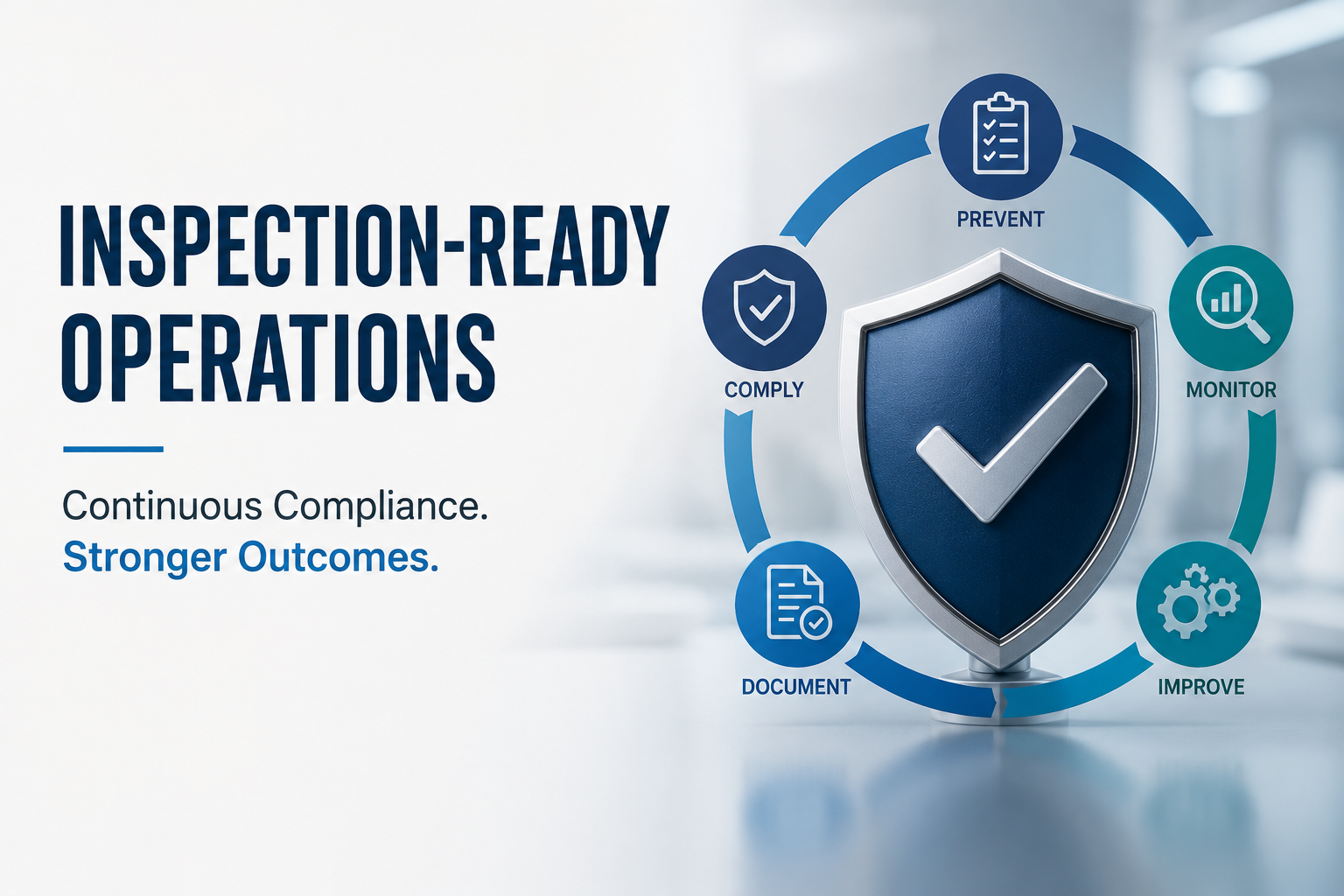
Clinical trial operations are becoming increasingly complex, data-intensive, and globally interconnected. As sponsors manage larger volumes of data, decentralized trial models, multiple technology platforms, and expanding vendor ecosystems, regulatory expectations around oversight and quality management continue to evolve. In this environment, inspection readiness is no longer viewed as a final-stage activity performed shortly before an audit or regulatory inspection. Instead, it is becoming an ongoing operational strategy integrated into everyday clinical trial execution.
For many organizations, traditional quality approaches based on retrospective corrections and reactive compliance measures are no longer sufficient. Delayed issue identification, inconsistent documentation practices, fragmented oversight, and disconnected operational workflows can create significant regulatory and operational risks. As a result, sponsors are increasingly shifting toward continuous compliance models designed to improve visibility, strengthen governance, and proactively identify quality concerns before they escalate.
This transformation is also being driven by the growing adoption of Risk-Based Quality Management (RBQM), centralized oversight models, and digital operational systems capable of supporting real-time quality monitoring. Rather than focusing exclusively on periodic audits or isolated corrective actions, organizations are recognizing the value of embedding quality management directly into operational processes across the entire study lifecycle.
At the same time, inspection readiness is evolving beyond regulatory compliance alone. It is becoming a broader indicator of operational maturity, organizational resilience, and execution consistency. Sponsors that build proactive quality cultures and strengthen continuous oversight capabilities are positioning themselves to improve not only inspection outcomes, but also operational efficiency, decision-making, and long-term clinical trial performance.
RBQM and Centralized Oversight Are Reshaping Clinical Operations
For years, many clinical trial oversight models relied heavily on retrospective reviews, periodic audits, and manual quality checks performed after operational issues had already occurred. That approach may have worked in less complex trial environments, but today’s global studies generate far more data, involve more stakeholders, and move at a much faster pace than traditional operational models were designed to support.
As a result, sponsors are increasingly shifting toward Risk-Based Quality Management (RBQM) frameworks and centralized oversight strategies that allow teams to identify risks earlier and manage quality continuously rather than reactively.
The conversation is no longer centered on “finding issues during inspections.” Instead, organizations are asking a different question:
How can risks be identified and mitigated before they impact patients, data integrity, or study timelines?
That shift is fundamentally changing how clinical operations teams approach oversight.
According to the ACRO and Springer publication on centralized monitoring and RBQM (2024), modern quality systems are becoming more proactive, data-driven, and integrated across operational workflows. Rather than depending solely on traditional on-site review activities, organizations are increasingly using centralized analytics, trend analysis, and risk indicators to gain broader visibility into trial performance and emerging quality concerns.
This evolution is also closely aligned with the direction outlined in ICH E6(R3), which places strong emphasis on quality-by-design principles and risk-proportionate oversight approaches. The guideline encourages sponsors to focus resources on activities and data that are critical to participant safety and trial reliability rather than applying the same level of oversight uniformly across all processes.
What makes this operational shift particularly important is that RBQM is not simply a monitoring strategy — it is becoming part of the broader operating model of clinical research organizations.
Teams are now expected to:
- detect risks earlier,
- improve cross-functional visibility,
- strengthen documentation consistency,
- centralize operational intelligence,
- and create faster escalation pathways.
This requires much closer collaboration between clinical operations, quality teams, data management, regulatory functions, and technology groups.
At the same time, the increasing use of digital oversight systems is transforming how organizations evaluate operational performance. Dashboards, centralized monitoring platforms, automated alerts, and remote quality reviews are allowing sponsors to move from static oversight models to more dynamic and continuous quality management environments.
Deloitte’s 2025 Life Sciences Outlook also highlights that life sciences organizations are under growing pressure to modernize operational infrastructures and improve organizational agility in response to increasing trial complexity and regulatory expectations (Deloitte, 2025). In practice, this means sponsors can no longer depend on fragmented oversight structures that limit visibility across vendors, systems, and study activities.
Another important reality is that regulators are increasingly expecting organizations to demonstrate not only that issues were corrected, but that quality systems are capable of identifying risks proactively and maintaining ongoing operational control. This changes the definition of inspection readiness entirely.
Inspection readiness is no longer a “project” activated before an audit.
It is becoming a continuous operational discipline.
Organizations that successfully integrate RBQM principles into everyday execution are often better positioned to:
- reduce operational surprises,
- improve inspection preparedness,
- strengthen data quality,
- accelerate issue resolution,
- and support more consistent study delivery across global programs.
In many ways, RBQM and centralized oversight are helping reshape clinical operations from a reactive support function into a more predictive, intelligence-driven operational model focused on prevention, visibility, and long-term quality sustainability.
Continuous Compliance Is Becoming a Competitive Advantage
Not long ago, compliance was often viewed as a necessary obligation — something organizations managed primarily to satisfy inspections, audits, or regulatory expectations. In many cases, quality activities operated separately from day-to-day clinical operations, and inspection readiness efforts intensified only when a regulatory visit was approaching.
That mindset is changing rapidly.
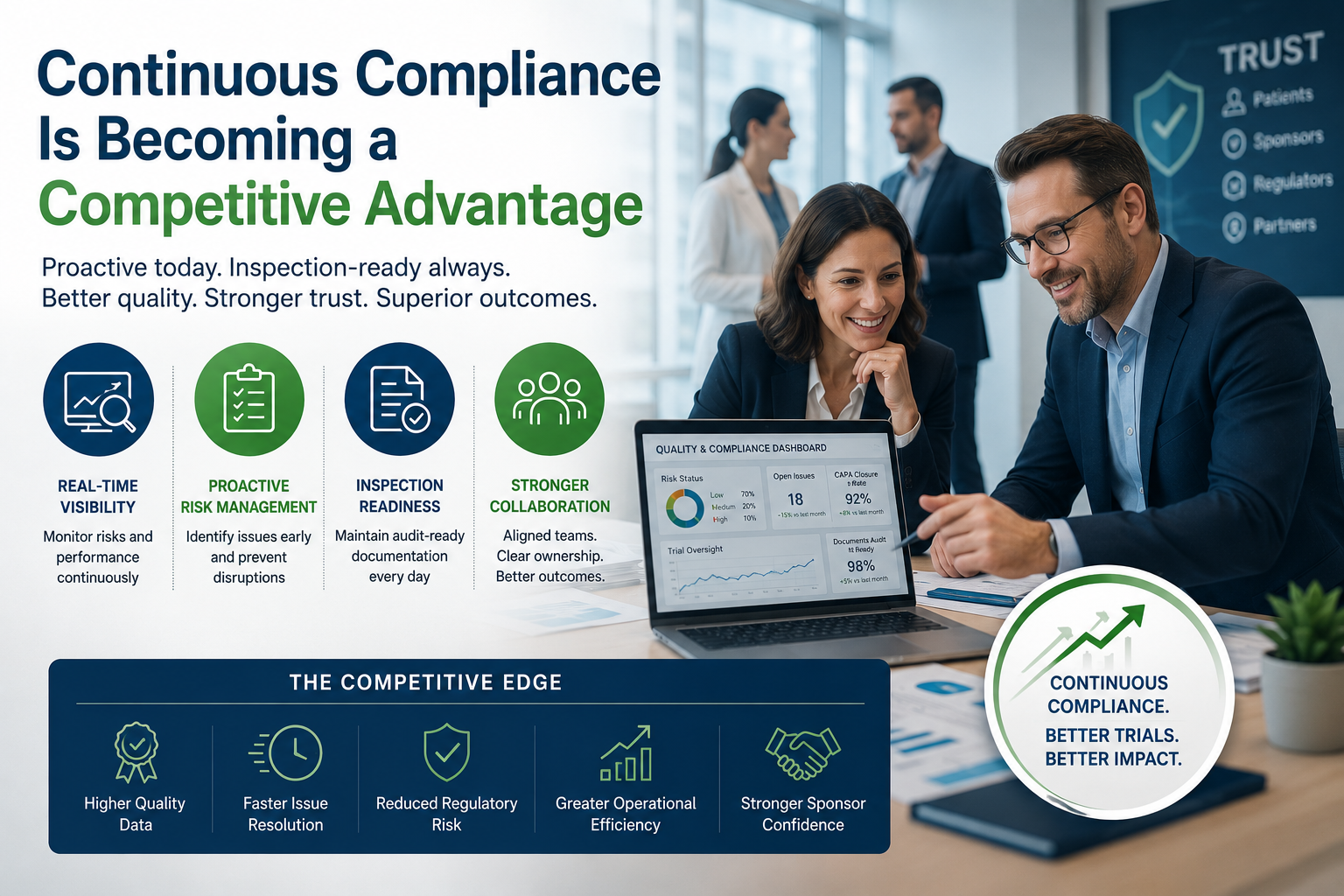
Today, continuous compliance is increasingly being recognized as a strategic operational capability that can directly influence execution quality, organizational resilience, and long-term trial performance. Sponsors are beginning to understand that strong quality systems do more than reduce regulatory risk — they also improve operational consistency, strengthen decision-making, and create greater confidence across the clinical trial ecosystem.
One of the major drivers behind this shift is the growing complexity of modern clinical trials. Global studies now involve larger datasets, decentralized activities, remote oversight, multiple technology platforms, and broader vendor networks than ever before. Under these conditions, reactive quality models often struggle to keep pace with operational demands.
The IQVIA report Mastering Inspection Readiness (2024) explains that organizations are increasingly moving toward integrated inspection readiness programs that embed quality oversight into routine operational activities rather than treating inspections as isolated events. This includes continuous documentation review, proactive issue management, mock inspections, centralized quality monitoring, and stronger alignment between operational and quality teams.
The shift toward continuous compliance is also reinforced by the updated expectations within ICH E6(R3), which encourages organizations to implement fit-for-purpose quality systems and maintain ongoing oversight throughout the trial lifecycle. Rather than focusing only on correcting findings after issues occur, the guideline promotes a more preventive and risk-based approach to quality management.
What is particularly interesting is that continuous compliance is no longer benefiting only regulatory teams. It is starting to influence operational performance across entire organizations.
When oversight systems are more proactive and integrated:
- issues are identified earlier,
- escalation pathways become faster,
- documentation quality improves,
- operational visibility increases,
- and teams spend less time reacting to avoidable disruptions.
This creates a much more stable operational environment.
ELIQUENT’s analysis of ICH E6(R3) and inspection readiness (2025) also highlights the growing importance of real-time operational traceability and digital oversight capabilities. Organizations are now expected to demonstrate not only that processes exist, but that quality systems are functioning continuously and effectively across evolving clinical trial environments.
At the same time, Deloitte’s 2025 Life Sciences Outlook suggests that organizations capable of combining operational agility with governance maturity will likely gain stronger positioning in increasingly competitive and regulated markets (Deloitte, 2025). In practical terms, this means that quality management is becoming part of organizational strategy rather than remaining solely within compliance departments.
Another important reality is that sponsors, CROs, and FSP partners are being evaluated not only on delivery timelines, but also on how consistently and transparently they manage risk, quality, and oversight. Organizations that demonstrate stronger operational governance are often better positioned to:
- support faster study execution,
- maintain inspection readiness,
- strengthen sponsor confidence,
- reduce operational disruptions,
- and sustain long-term partnerships.
In many ways, continuous compliance is evolving into a business differentiator.
The organizations that succeed in the coming years will likely be those that stop viewing compliance as a reactive exercise and start treating it as an integrated operational mindset embedded into everyday execution, decision-making, and organizational culture.
Inspection Readiness Is No Longer a Periodic Activity
For many years, inspection readiness in clinical research was approached as a milestone activity — something organizations intensified shortly before regulatory inspections, sponsor audits, or important submissions. Teams would rush to review documentation, reconcile TMF gaps, update training records, and prepare CAPA responses in a compressed period of time. While this reactive model may have worked in less complex operational environments, today’s clinical trial landscape no longer allows organizations to depend on short-term remediation strategies alone.
Modern trials operate in a far more dynamic ecosystem shaped by decentralized activities, digital platforms, remote oversight, global vendor networks, and continuously evolving regulatory expectations. Under these conditions, inspection readiness can no longer function as a temporary project. It must become part of everyday operational execution.
The updated ICH E6(R3) guideline reinforces this shift by placing greater emphasis on proactive quality management, risk-proportionate oversight, and fit-for-purpose operational controls throughout the entire study lifecycle (ICH, 2025). Rather than focusing only on retrospective corrections, the guideline encourages sponsors to build systems capable of continuously identifying, managing, and mitigating risks before they affect participant safety or data integrity.
This evolution is also reflected in how organizations are redesigning their quality strategies internally. According to IQVIA’s Mastering Inspection Readiness report (2024), sponsors and CROs are increasingly moving toward integrated inspection readiness frameworks that combine operational oversight, documentation quality, centralized monitoring, and ongoing quality review activities. The report explains that organizations with stronger continuous compliance programs are often better prepared to manage hybrid inspections, remote audits, and rapidly changing regulatory expectations.
Importantly, inspection readiness today extends beyond documentation alone. Regulators are increasingly evaluating whether organizations maintain operational control in real time — including oversight of vendors, escalation pathways, risk management processes, protocol deviations, and quality governance structures.
This means that inspection readiness is now closely connected to operational maturity.
Organizations that struggle with fragmented communication, delayed issue escalation, inconsistent documentation practices, or disconnected oversight systems may face greater regulatory exposure even if individual audit findings appear manageable on the surface. In contrast, organizations with integrated quality cultures are often able to identify operational weaknesses earlier and respond more effectively before issues escalate.
ELIQUENT’s 2025 analysis on ICH E6(R3) further highlights how inspection readiness is evolving toward a more continuous and digitally enabled model. The publication emphasizes the growing importance of real-time traceability, centralized operational visibility, and proactive governance frameworks capable of supporting ongoing regulatory compliance rather than isolated inspection preparation efforts.
Another major factor driving this transformation is the increasing complexity of oversight responsibilities across global studies. Sponsors are now expected to maintain visibility across multiple vendors, regions, systems, and operational partners simultaneously. This level of complexity makes reactive quality management significantly more difficult and increases the need for continuous monitoring and integrated oversight models.
As a result, organizations are beginning to recognize that inspection readiness is no longer simply a regulatory requirement — it is becoming a reflection of how effectively clinical operations are managed overall.
Companies that embed quality into daily operational processes are often better positioned to:
- improve issue detection,
- strengthen documentation consistency,
- accelerate corrective actions,
- maintain stronger inspection preparedness,
- and reduce operational disruptions during study execution.
Ultimately, the industry is moving toward a future where inspection readiness is not something teams “prepare for” occasionally, but something organizations continuously maintain through stronger governance, operational discipline, and proactive quality management practices.
Conclusion:
Clinical research is entering a new phase where quality management can no longer operate separately from daily operations. As trials become more complex, decentralized, and digitally connected, sponsors are recognizing that reactive compliance models are no longer enough to support sustainable execution or maintain consistent oversight across global studies.
Inspection readiness is evolving from a periodic regulatory exercise into a continuous operational discipline embedded throughout the entire clinical trial lifecycle. Organizations are increasingly expected to maintain real-time visibility, stronger governance structures, proactive risk management, and integrated quality systems capable of identifying issues before they escalate into larger operational or regulatory concerns.
At the same time, the rise of Risk-Based Quality Management (RBQM), centralized oversight, and digital operational tools is reshaping how sponsors, CROs, and FSP partners approach quality and compliance. The focus is no longer simply on correcting findings after inspections occur, but on building operational environments where quality, traceability, and accountability are continuously maintained.
What makes this transformation particularly important is that continuous compliance is starting to influence far more than inspection outcomes alone. Strong oversight models can improve operational consistency, accelerate issue resolution, strengthen decision-making, and create more resilient clinical operations overall.
In an increasingly competitive and regulated environment, organizations that successfully integrate proactive quality cultures into everyday execution will likely be better positioned to maintain regulatory confidence, improve study performance, and support long-term operational sustainability.
Ultimately, the future of inspection readiness will depend less on preparing for audits and more on creating operational systems where quality is continuously visible, measurable, and embedded into the way clinical trials are executed every day.
